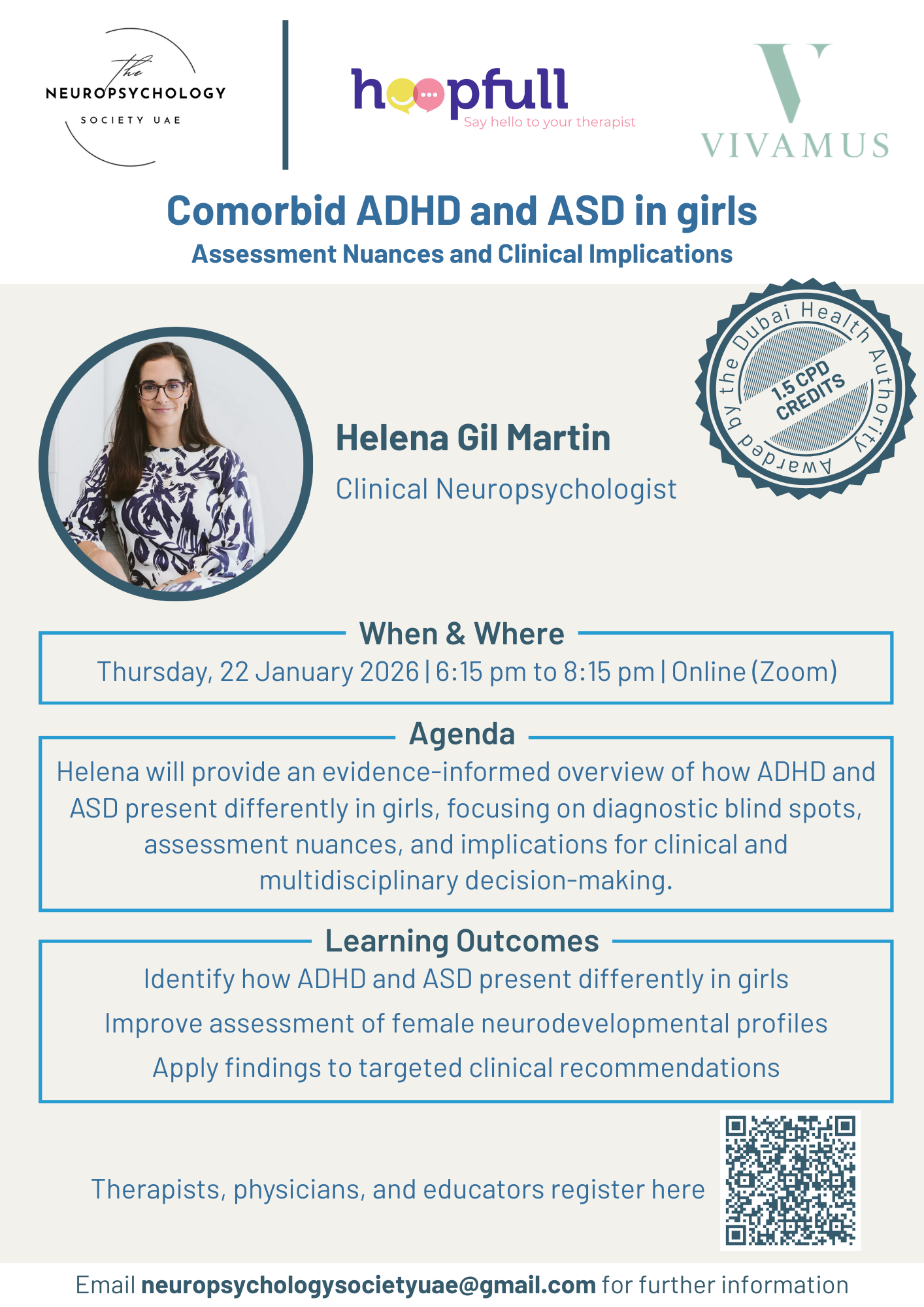
🔎 ADHD & Autism in Girls: Diagnostic Challenges and Clinical Implications
Attention Deficit Hyperactivity Disorder (ADHD) and Autism Spectrum Disorder (ASD) remain significantly under-recognized in girls. Gendered referral pathways, diagnostic criteria largely normed on male presentations, and high levels of social masking often obscure identification.
This CPD session reviews current research on the epidemiology and phenomenology of ADHD and ASD in girls, with a focus on how inattentive symptoms, internalising distress, and subtle social communication differences contribute to delayed or missed diagnosis.
Drawing on empirical research and clinical case vignettes, the session explores key assessment challenges, including limitations of commonly used rating scales and standardized observational tools. Emphasis is placed on the importance of developmental history and qualitative clinical data.
Clinical implications for differential diagnosis, management of common comorbidities, and tailored recommendations for schools, families, and multidisciplinary treatment teams will be discussed. The session aims to enhance clinicians’ diagnostic sensitivity and confidence when evaluating neurodevelopmental presentations in girls and adolescents, supporting earlier identification and more appropriate intervention.
⭐ Event Details
📅 Date: Thursday, 22 January 2026
🕡 Time: 6:15 pm – 8:15 pm (2 hours)
💻 Venue: Online (via Zoom)
🎤 Speaker: Helena Gil Martin
📝 Register here: https://forms.gle/574tRkbxyQXLAm758
📅 Agenda
6:15 p.m. – 6:20 p.m. | Introduction
- Opening remarks by the Society Chair
- Speaker introduction
- Overview of session objectives
6:20 p.m. – 7:00 p.m. | Epidemiology & Diagnostic Gaps
- Underdiagnosis and delayed diagnosis in girls
- Masking and camouflaging behaviours
- Gender differences in referral pathways
- Prevalence data and bias in diagnostic criteria
7:00 p.m. – 7:30 p.m. | Clinical Presentation
- Overlapping neuropsychological features
- Female-specific presentation patterns
- Illustrative clinical case vignettes
7:30 p.m. – 7:45 p.m. | Assessment Nuances
- Comprehensive history-taking and use of multiple informants
- Rating scales: limitations and clinical recommendations
- Neuropsychological testing:
- Executive functioning
- Social cognition
- Processing speed
- Attention
- Observational assessment methods
7:45 p.m. – 8:00 p.m. | Clinical & Therapeutic Implications
- Tailored recommendations for schools
- Addressing missed identification of girls with ADHD/ASD
- Increasing teacher awareness
- Managing common comorbidities:
- Anxiety
- Depression
- Eating disorders
- Psychotherapy focus:
- Emotion regulation
- Identity development
- Self-esteem
- Family support:
- Psychoeducation for parents on gender-specific presentations
8:00 p.m. – 8:15 p.m. | Discussion
- Participant questions
- Open discussion and reflections
🎯 Learning Outcomes
By the end of this session, participants will be able to:
- Identify gender-specific presentation patterns of ADHD and ASD in girls, and explain how masking and referral biases contribute to underdiagnosis or misdiagnosis
- Apply assessment strategies that better capture female neurodevelopmental profiles, including informed use of rating scales, neuropsychological data, and qualitative observations
- Integrate diagnostic insights into tailored clinical and therapeutic recommendations, particularly when managing common comorbidities such as anxiety and depression